
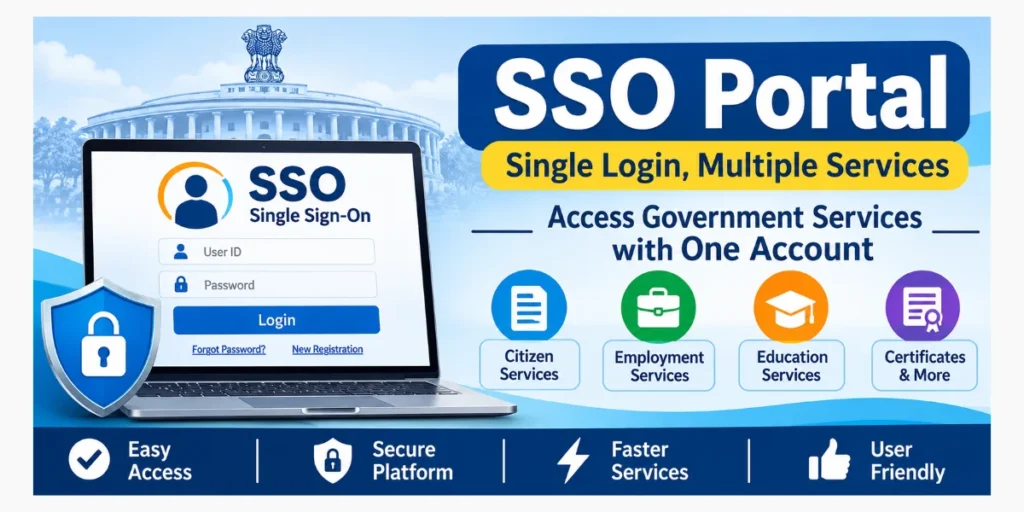
The SSO Portal is an online platform designed to provide users with convenient access to multiple digital services through a single login. Instead of creating separate usernames and passwords for different government or public services, users can access several connected applications from one account.
In India, the term SSO Portal is commonly associated with Single Sign-On (SSO) systems operated by government departments. These portals make online services easier to access by bringing different applications together under one digital identity. Users can register, log in, update account details, and access available services without repeatedly creating separate accounts.
What Is an SSO Portal?
SSO stands for Single Sign-On. An SSO Portal allows a registered user to authenticate once and then access multiple linked services from the same account.
The main purpose of an SSO system is to simplify digital access. Traditionally, users may need different login credentials for different websites. With an SSO system, one account can provide access to various applications connected to the platform.
Depending on the particular SSO Portal, available services may include government applications, certificates, employment-related services, education services, utility services, business services, and other online facilities.
How Does the SSO Portal Work?
The basic working process of an SSO Portal is relatively simple. First, a user creates an account by providing the required personal and identification details. After registration, the user receives login credentials or another authentication method.
When the user wants to access a connected service, they can log in through the SSO system. After successful authentication, the portal may provide access to the applications available to that account.
This approach reduces the need to remember multiple passwords and makes it easier for users to move between connected services.
The exact registration, authentication, and service-access process can differ depending on the SSO system and the department operating it.
SSO Portal Registration
New users generally need to complete an online registration before they can use an SSO Portal. The registration process usually requires basic information and an identity or contact verification method.
A typical registration process may involve the following steps:
- Visit the official SSO Portal website.
- Select the registration or sign-up option.
- Choose the appropriate user category, if available.
- Enter the requested personal and contact information.
- Complete identity or mobile/email verification.
- Create or receive the required login credentials.
- Submit the registration form.
- Log in after the account has been successfully created.
Users should always check the official portal for the latest registration requirements because available options can change over time.
SSO Portal Login
Once registration is completed, users can access their account through the SSO Portal login page. The login process generally requires a username, ID, password, OTP, or another supported authentication method.
For a successful login, users should make sure that their registered details are entered correctly. If the portal provides an OTP-based login option, the registered mobile number must generally be available to receive the verification code.
Users should avoid sharing passwords, OTPs, or other authentication information with anyone. Official government portals will normally provide their own secure login and verification process.
Services Available Through an SSO Portal
One of the biggest advantages of an SSO Portal is that it can bring several online services together in one place. The exact services depend on the organization and portal.
Common categories may include:
- Government department applications
- Citizen services
- Employment-related services
- Education and scholarship applications
- Business and industry services
- Certificates and document-related services
- Utility-related applications
- Employee services
- Online forms and applications
- Status tracking and service requests
Instead of visiting several different platforms separately, users may be able to access connected applications through their SSO account.
Benefits of Using an SSO Portal
An SSO Portal can provide several benefits for both citizens and government organizations.
One Account for Multiple Services
The most important advantage is centralized access. Users may not need separate login credentials for every connected application.
Easier Online Access
An SSO system can make digital services easier to find and use because multiple applications are available through a common platform.
Reduced Password Management
Managing several usernames and passwords can be difficult. Single sign-on reduces this burden by allowing users to authenticate through one primary account.
Faster Service Access
Once users are authenticated, they may be able to open connected applications without repeatedly entering login information.
Centralized Account Management
Many SSO systems provide account settings where users can manage their profile information, authentication methods, and other account-related options.
What to Do If You Forget Your SSO Password
Forgetting a password is a common problem when using online accounts. Most modern SSO systems provide a password recovery or account recovery option.
Users should open the official login page and look for options such as Forgot Password, Reset Password, or Account Recovery. The portal may ask for a registered mobile number, email address, username, or another verification method.
After successful verification, the user can generally create a new password or regain access to the account.
It is important to use only the official recovery process and avoid websites or individuals claiming to recover an SSO account on the user’s behalf.
How to Keep Your SSO Account Secure
Because an SSO account can provide access to multiple services, account security is particularly important.
Users should follow basic security practices:
- Use a strong and unique password.
- Never share your password or OTP.
- Avoid logging in through suspicious links.
- Check the website address before entering credentials.
- Keep registered mobile and email information updated.
- Log out when using a shared computer.
- Avoid saving passwords on public devices.
- Use official websites and applications whenever possible.
These simple precautions can help reduce the risk of unauthorized access.
SSO Portal vs. Separate Service Logins
A traditional online service may require users to create a separate account for every application. This can result in multiple usernames, passwords, and registration processes.
An SSO Rajasthan Portal follows a different approach. It provides a central authentication system through which users can access multiple connected applications.
| Feature | SSO Portal | Separate Logins |
|---|---|---|
| Account management | Centralized | Separate |
| Login credentials | Usually one primary account | Multiple accounts |
| Service access | Multiple connected services | Individual websites |
| Password management | Easier | More difficult |
| User experience | More centralized | More fragmented |
The actual features vary according to the specific SSO platform.
Important Things to Remember
Users should always access an SSO Portal through its official website. Search results can sometimes contain unofficial websites that use similar names or provide outdated information.
Before entering personal information, passwords, or OTPs, verify that the website belongs to the relevant government department or organization.
Also, users should remember that an SSO account does not necessarily provide access to every government service. Only applications integrated with that particular SSO system may be available.
Conclusion
The SSO Portal provides a convenient way to access multiple digital services through a centralized login system. By reducing repeated registrations and login requirements, SSO technology can make online services simpler and more organized.
Users can generally register for an account, log in, access connected applications, manage their profile, and recover account credentials when necessary. However, registration and available services differ between SSO platforms.
For security and accurate information, users should always rely on the official portal operated by the relevant government department or organization when registering, logging in, recovering an account, or submitting important information.